Wed, 20 May 2026
Vertical Climbed: 1,980 meters (6,496 feet)
Vertical Descended: 1,972 meters
Rating: 3
This was a two day cycling adventure linking three well known cycle routes: the ViaRhôna, the Dolce Via and the Via Fluvia. It made a satisfying loop from the Rhône valley up onto the Ardèche plateau and back again, with plenty of railway history, quiet valleys, tunnels, viaducts and a few reminders that mid May in the hills is not quite summer.
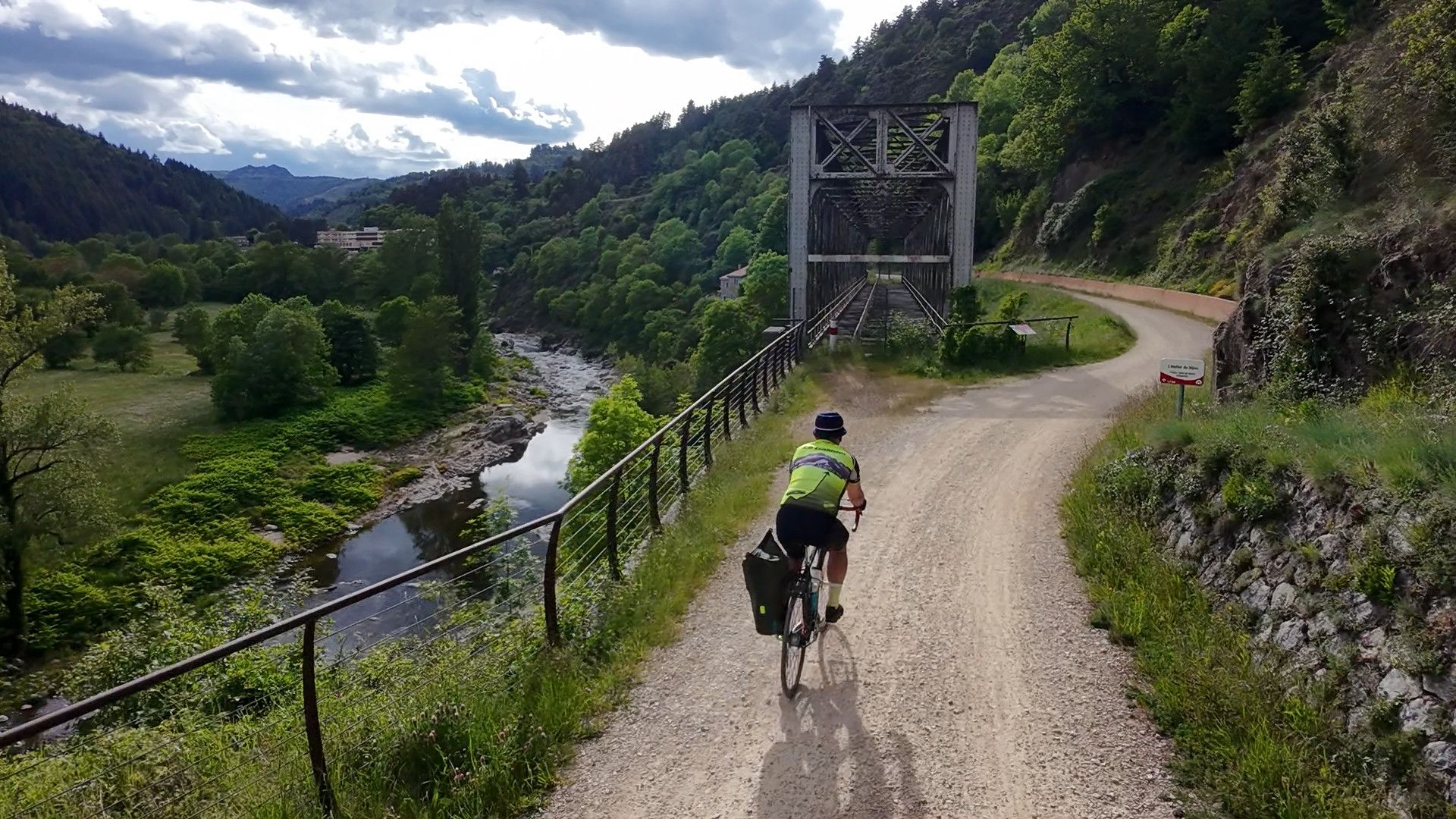
The Dolce Via is a 90 km route through the heart of the Ardèche, following the old railway line through the Eyrieux valley and connecting with the ViaRhôna, the Train de l’Ardèche and the Velay Express. It is generally gentle, scenic and well suited to touring, although the higher sections towards Saint Agrève feel more serious than the easy start suggests.
Day 1: Lyon to Saint Martin de Valamas
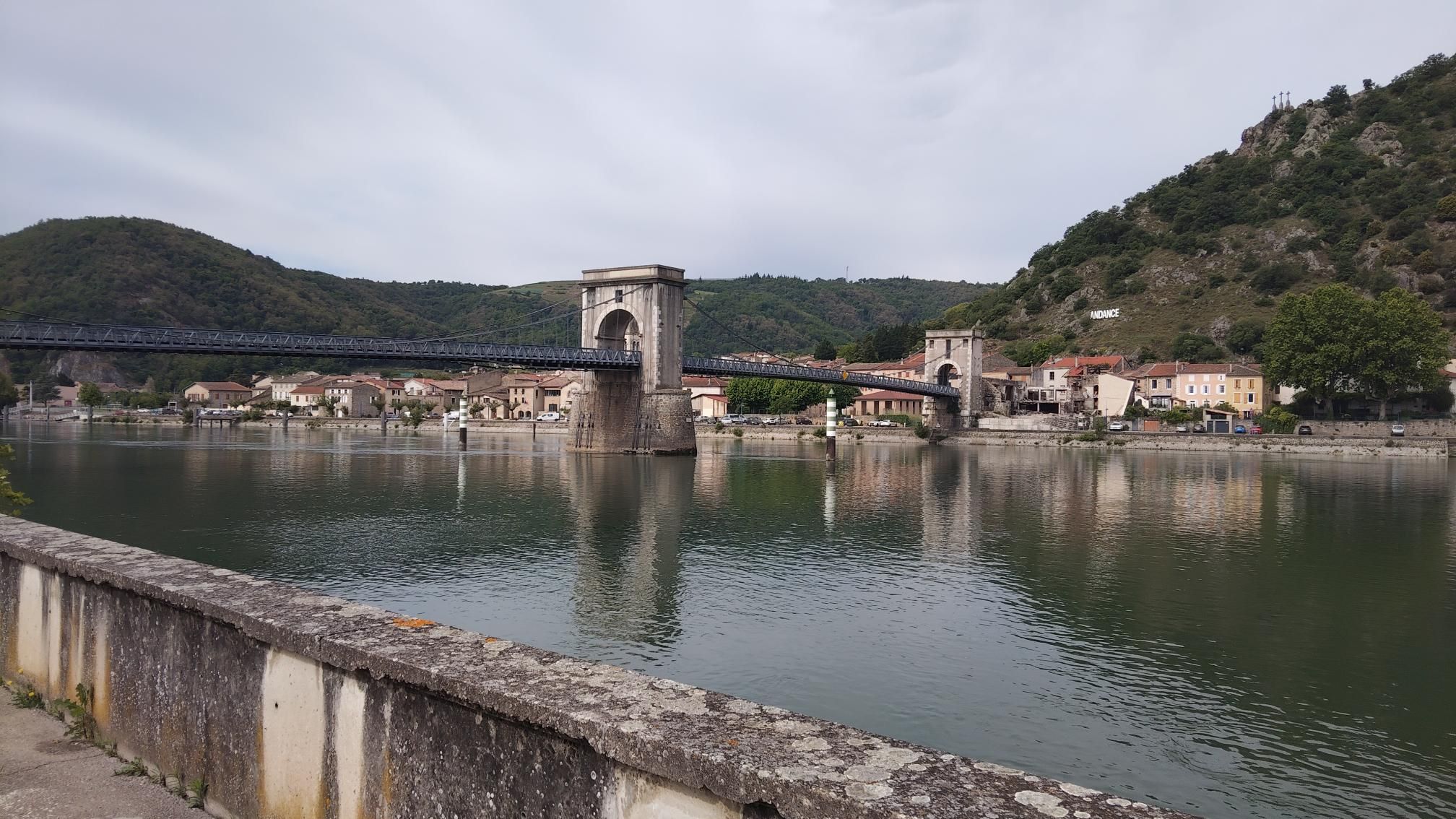
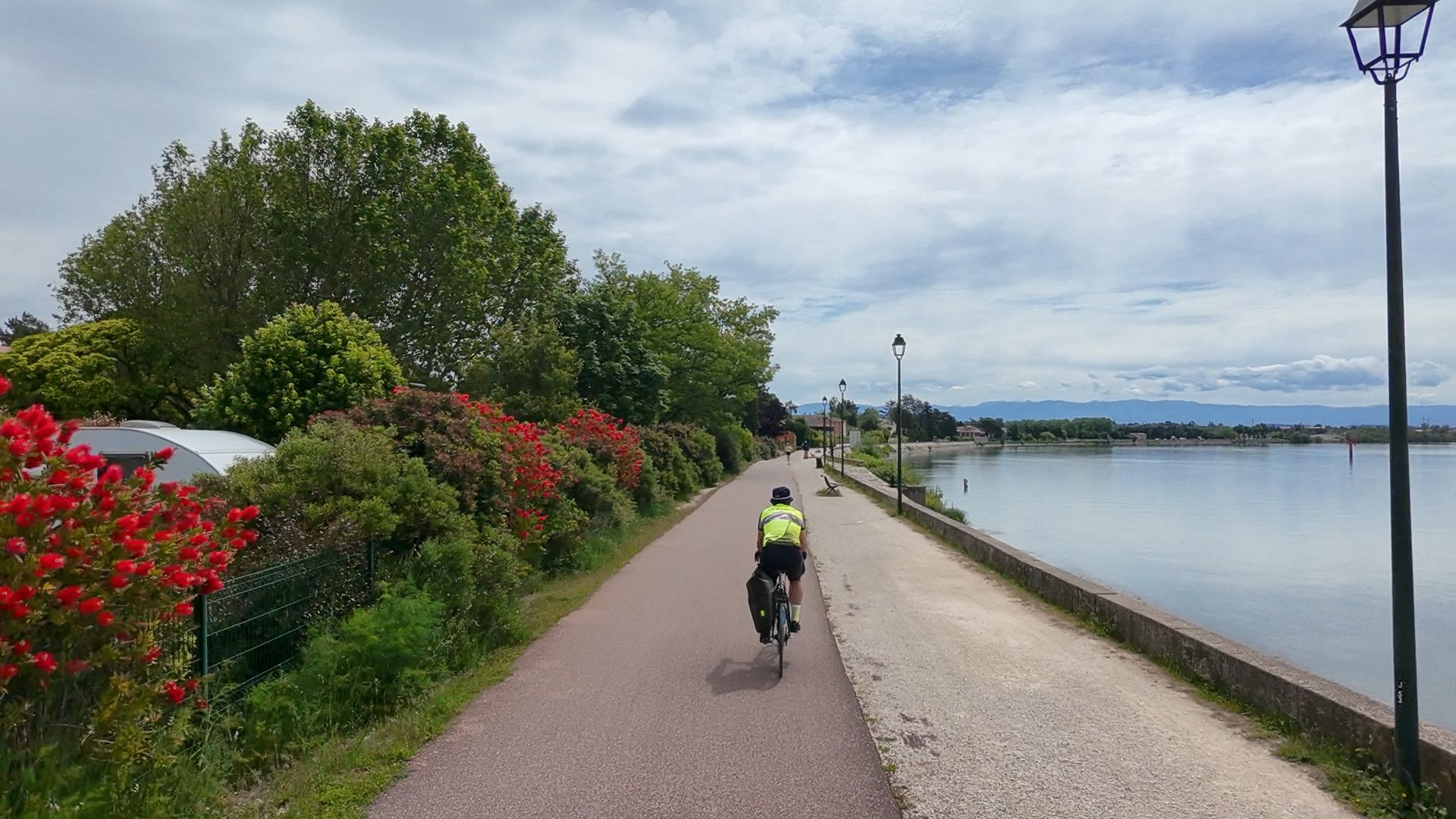
I took the TER from Lyon to Saint Rambert d’Albon, then picked up the ViaRhôna cycle path heading south. The route follows the river through Andancette to Saint Vallier, where you cross onto the right bank, before continuing towards Tournon sur Rhône.
Tournon is a good place to pause. It has a proper old centre, the Château Musée above the river, and the Sentier des Tours, a short climb that gives views over Tournon, Tain l’Hermitage and the Hermitage vineyards opposite. It would make an excellent lunch stop, although I was a little too early.
From Tournon I crossed back onto the left bank and continued towards Valence. This was the least enjoyable part of the day. Valence itself felt noisy, with the A7 motorway running close to the river. I had hoped to find a pleasant guinguette with river views, but nothing obvious appeared at the right moment. I pushed on to Soyons, but by then it was just after 1pm and the cafés were not very keen on serving food.
Finally, at Charmes sur Rhône, the landlady of the PMU bar agreed to serve the plat du jour. Spag bol, even in my student days I am not sure I had ever tasted it quite like that, but it was excellent and about ten euros. Charmes sur Rhône itself is also worth a short look for its historic village, and Beauchastel, only a few kilometres further on, is listed as a village de caractère with a château and local heritage museum.
From Beauchastel the ride joins the Dolce Via. The start is very mild, climbing at perhaps one or two percent. You barely notice the gradient. The surface is a mix of tarmac and compacted gravel, and the route slowly rises through the Eyrieux valley, gaining about 450 metres over 55 km to Saint Martin de Valamas. The Dolce Via follows the old railway and passes through gorges, tunnels, viaducts, villages and wooded hillsides, a lot of it in the shade.
There are campsites, cafés, water points and toilets along the way, although in mid May it was still out of season and not everything was open. There are also places where you could bivouac discreetly, although it is not encouraged. The usual rule is sunset to sunrise. At Le Cheylard there is a supermarket just off the trail, where I picked up a very welcome cold drink after being on water all day.
Aquarock Aventure, near the Dolce Via in the Eyrieux valley, is another possible stop if you are riding with family or making a more leisurely trip. It has treetop and rock based courses and two large ziplines over the river, so it is more of a half day activity than a quick cycling pause.
The final push to Saint Martin de Valamas includes the climb up into the town square, where the friendly bar served me a chicken burger and a much deserved pint. I decided to camp here, mainly because I wanted a shower. Camping La Teyre gave me a good welcome and was surprisingly busy, with a couple of school groups walking the trail.
Day 1 total: 131.88 km, 6h 45m 30s riding time, 710 m of climbing.
Day 2: Saint Martin de Valamas to Saint Rambert d’Albon via Saint Agrève, the Tracol and Annonay
I woke at 6am. It had rained most of the night and it was freezing cold, about 5°C. Summer was clearly still some way off, especially at 600 metres altitude. A hot shower brought some life back, and I packed up and left at 7am.
The climb from Saint Martin de Valamas was steeper than I expected, more like three to four percent. I found myself wondering how the steam trains managed this stretch, as it must have been close to the practical limit for a narrow gauge railway. The line was metre gauge, and this section has some of the most impressive engineering on the Dolce Via, with tunnels, cuttings and viaducts.
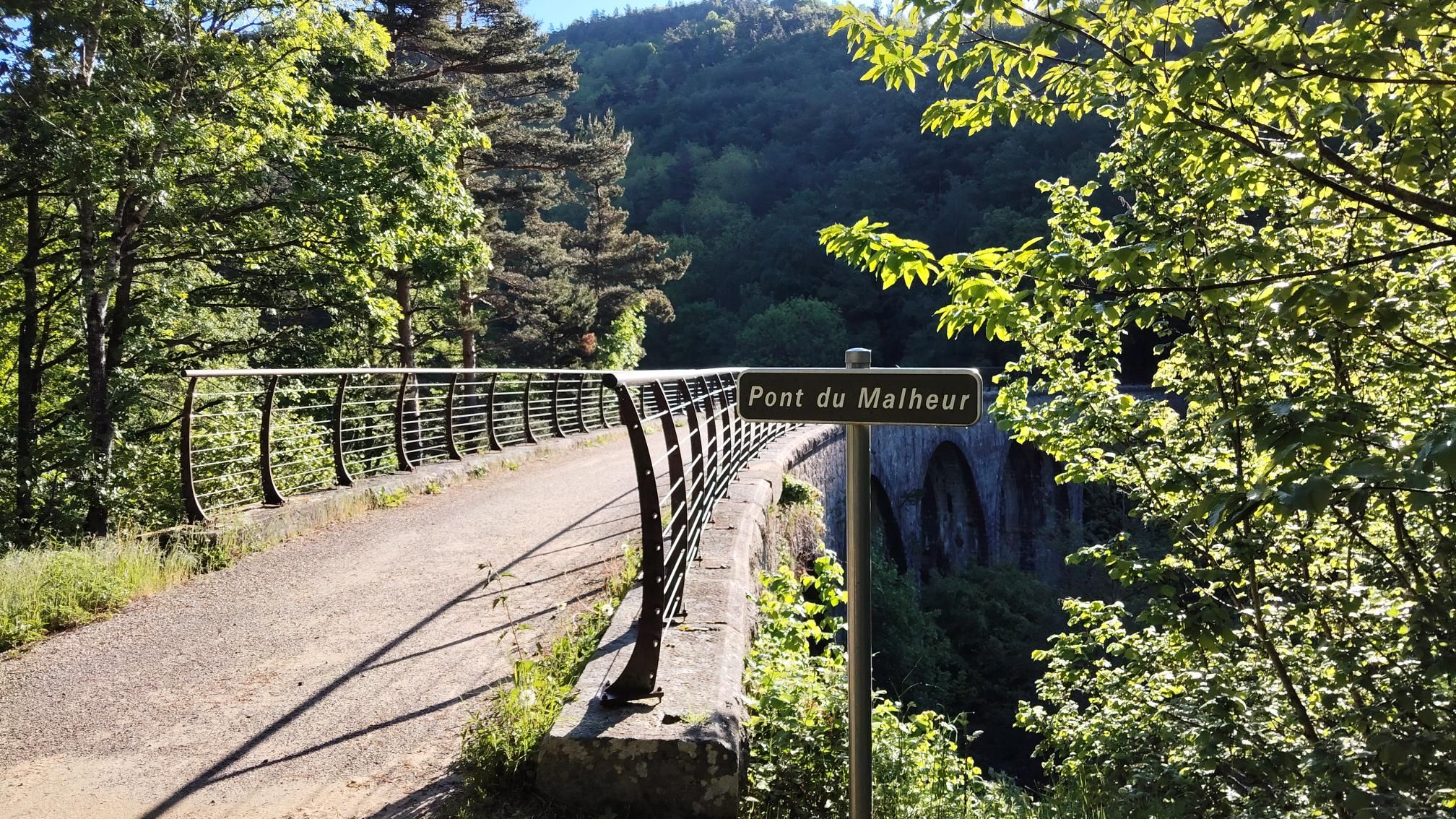
One of the most striking structures is the Viaduc de Bon Pas, also known as the Pont du Malheur. During construction in 1902, part of the central arch failed and nine workers fell to their deaths. It remains one of the most dramatic reminders of how difficult this railway was to build.
If you want to bivouac, there are a couple of old railway buildings on this section that looked as though they might offer some shelter, although obviously without facilities. There is mobile home parking at St Julien / Intres with washing facilities and quite a few flat picnic areas with benches where you could camp.
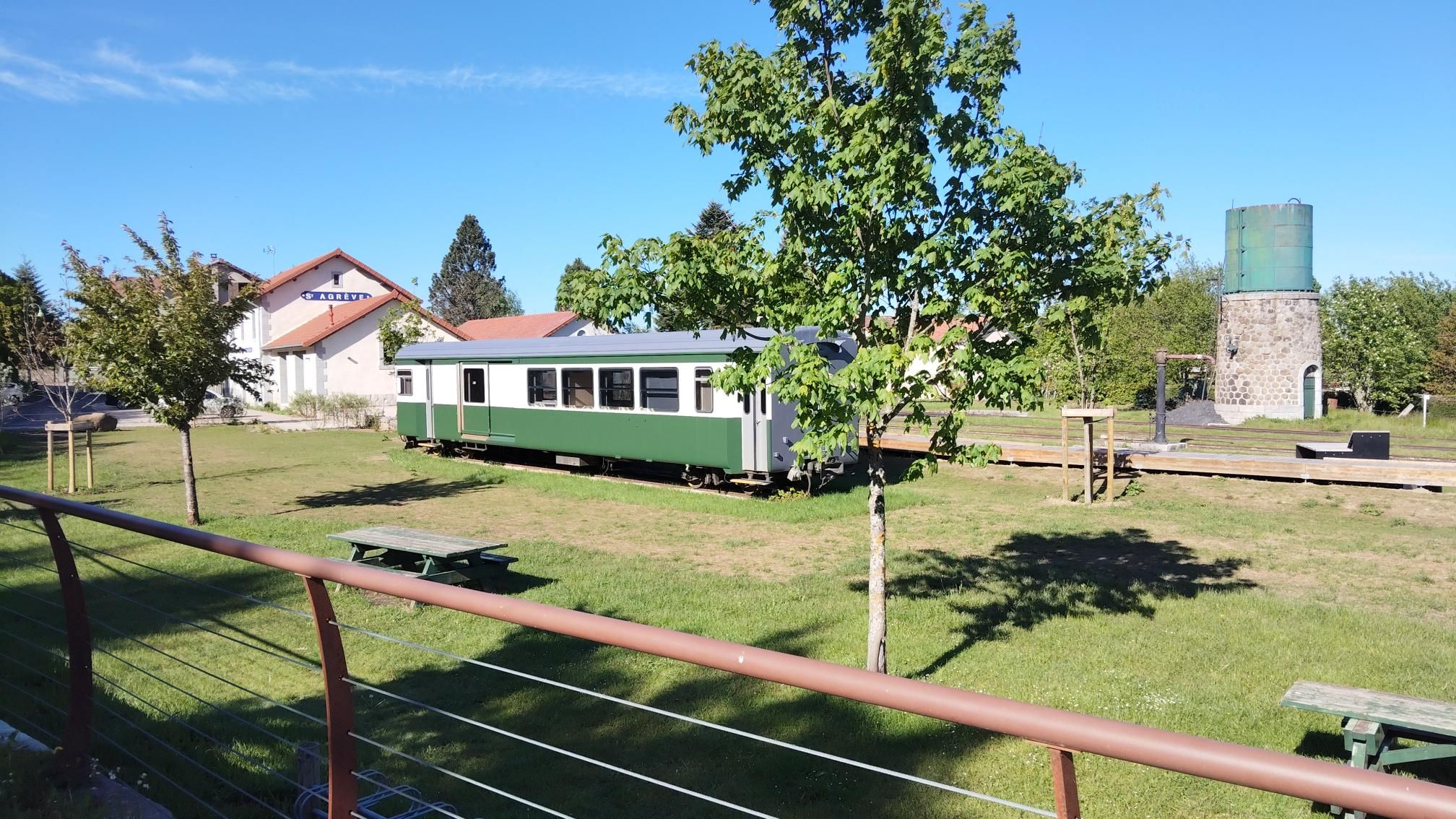
I had breakfast at Saint Agrève. This is the start of the Velay Express, the historic railway running towards Raucoules. When it is operating, bikes can be taken on the train, which makes it possible to link the Dolce Via and Via Fluvia in a much easier way. I continued by bike instead, crossing the Ardèche plateau.
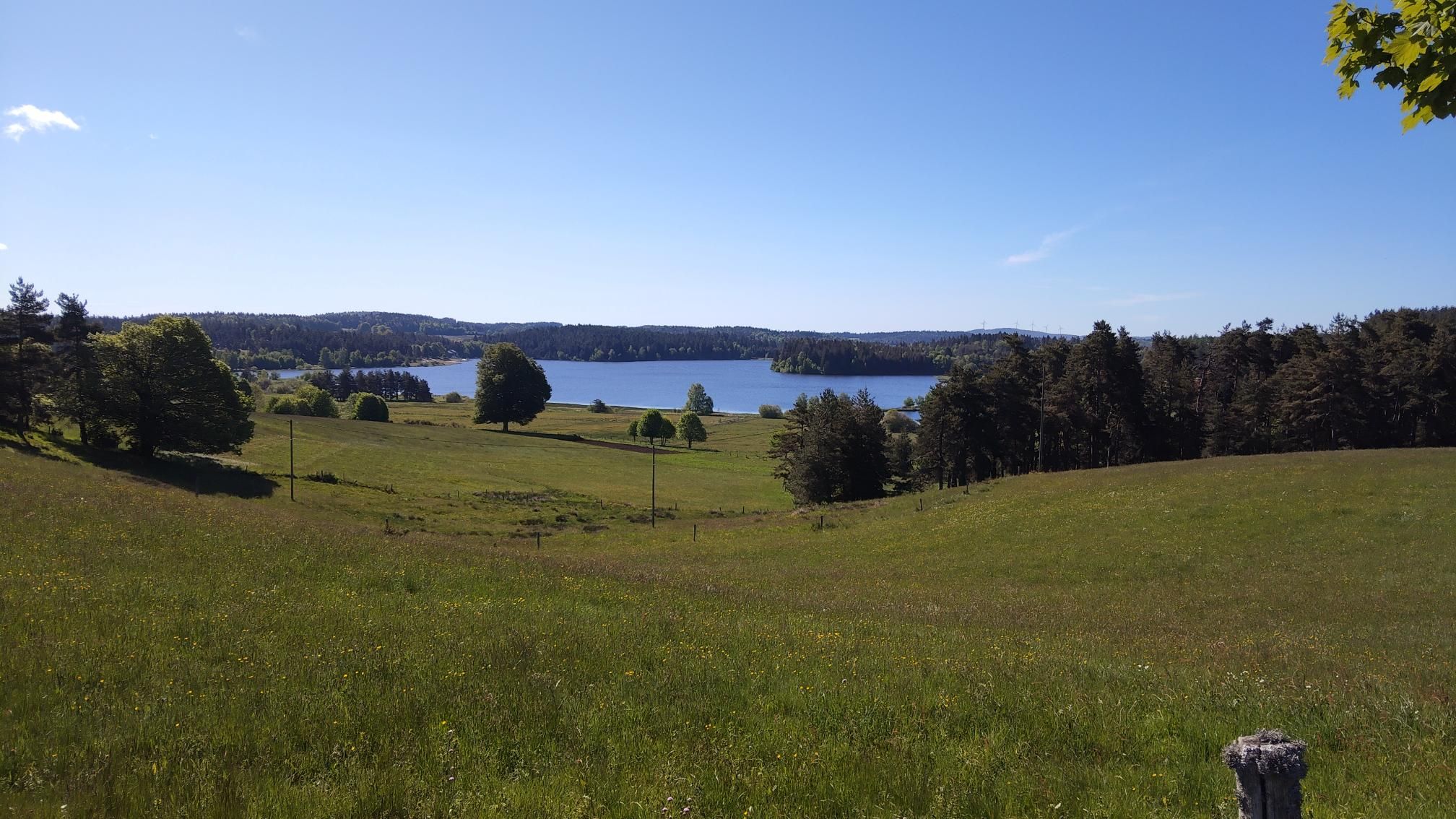
The morning was still cold, with a north westerly wind, but at least the sun was out. The route climbs to around 1,200 metres, close to small winter ski areas when there is snow. It then passes near Lac de Devesset, a pleasant lake at just over 1,000 metres altitude, with a campsite, leisure base, water activities in season and a short botanical path around the lake. It is a good place to stop if you are not trying to push on.
From there I continued towards Raucoules and Montfaucon, where the other end of the Saint Agrève railway is found and where the Via Fluvia begins. I had expected an easy descent back to the Rhône, something like the Dolce Via in reverse, but the Via Fluvia was much harder than that.
After a gentle climb of about 4 km to Montfaucon, there is a fast descent to Dunières, followed by a long climb of about 25 km to the Col du Tracol at 1,023 metres. The route is officially part of the Via Fluvia, a 100 km itinerary between the Loire and the Rhône, much of it laid out on former railway lines, but it is not yet fully continuous.
The tunnel under the Col du Tracol is closed to the public, so cyclists have to use a road section. The official Via Fluvia site describes this as a non aménagée connection, with the route using the D503 and warning cyclists to be vigilant because of traffic. They were not wrong. A few large trucks were labouring up the mountain pass spluttering diesel fumes.
The col itself is interesting because it sits on the watershed between the Loire and Rhône basins. Historically it was a passage between the Forez and the Velay, and it was also used by pilgrims on the Via Gebennensis towards Santiago de Compostela. The old railway tunnel beneath it is around 2.4 km long and is closed, partly for safety and partly to protect bats.
On the far side of the Tracol, the route picks up the Via Fluvia again and descends towards Annonay. By now it was finally warm, and I could take off my long sleeved merinos top. The route passes through the green hills of the Pilat and then towards the old industrial valleys around Annonay. The Via Fluvia is still incomplete here: the crossing of Annonay, the connection from Vernosc lès Annonay to Serrières and the Tracol section are still missing from the finished route.
Annonay was busy. Rather than stay on the official provisional Via Fluvia, which follows the Cance valley on a departmental road, I rejoined the old railway line on the far side of town. This was enjoyable for a while, but the cycle path stopped abruptly near Lac du Vert. Not being sure where to go, I retraced my steps towards Midon and took a back road to Thorrenc.
The Cance valley is not yet a fully protected cycle route, but it is reputedly scenic, with the gorges of the Cance, the suspended bridge and the Roche Péréandre among the main features.
Near Thorrenc I punctured. A quick change of inner tube got me moving again, and I was able to cross back onto the ViaRhôna at Andance, then return to Saint Rambert d’Albon for the train home.
Day 2 total: 124.85 km, 7h 22m 20s riding time, 1,451 m of climbing.
Overall impression
This is a rewarding but uneven loop. The ViaRhôna section is fast and practical, although not always beautiful around Valence. The winds are often from the north so it is great to head south on this trail. It is mainly off road and a lot is on tarmac or chip and seal. The Dolce Via is the highlight: gentle, quiet, scenic and full of railway history. The climb to Saint Agrève is more sustained than the first day suggests, but never brutal. Only opened in 2018 it was named as "bike path of the year" in 2020. Merited, in my opinion. The Via Fluvia is wilder and more fragmented. It has superb sections, but the Tracol and Annonay connections make it feel more like an adventure route than a finished family cycleway. The surface is mainly tarmac. There is a suprising "wall" at Bourg-Argental. This doesn't follow the railtrack which has been built over but climbs at around 20% over half a km. I was glad I was descending as I wouldn't have fancied this on a loaded touring bike.
In mid May, the main lesson is not to assume summer conditions. The Rhône valley may feel warm, but the Ardèche plateau can still be cold, wet and windy. A gravel bike or touring bike is ideal, and it is worth carrying food, layers and basic repair kit. There are cafés and shops, but they are not always open when you need them.
For a strong rider, this makes a fine two day loop from Lyon by train. For a more relaxed trip, I would stretch it to three days, overnight somewhere around Le Cheylard, then again near Devesset or Montfaucon. That would leave more time for the villages, the viaducts, the lake, the old railway sites and the occasional proper lunch. I saw a number of people on electric bikes and quite a few middle aged couples towing child buggies - containing dogs. Someone even had a Patou sheep dog on a trailer.
Sunny, 20C in the valley. North wind. 5C overnight and wet at the camping. The trail up to St Agrève was damp and the roads on the Ardeche plateau and down to Dunières were wet in places.