
Puyvalador is one of those ski areas that looks surprisingly good on paper. Its slopes rose from around 1,700 metres to almost 2,400 metres, giving it a respectable vertical drop of roughly 680 metres as well as a high altitude base. It lies in the cold Capcir region of the eastern Pyrenees, close to Formiguères and Les Angles, and its terrain included both forested lower slopes and higher open skiing. Yet in autumn 2026 the remaining lifts are being dismantled.
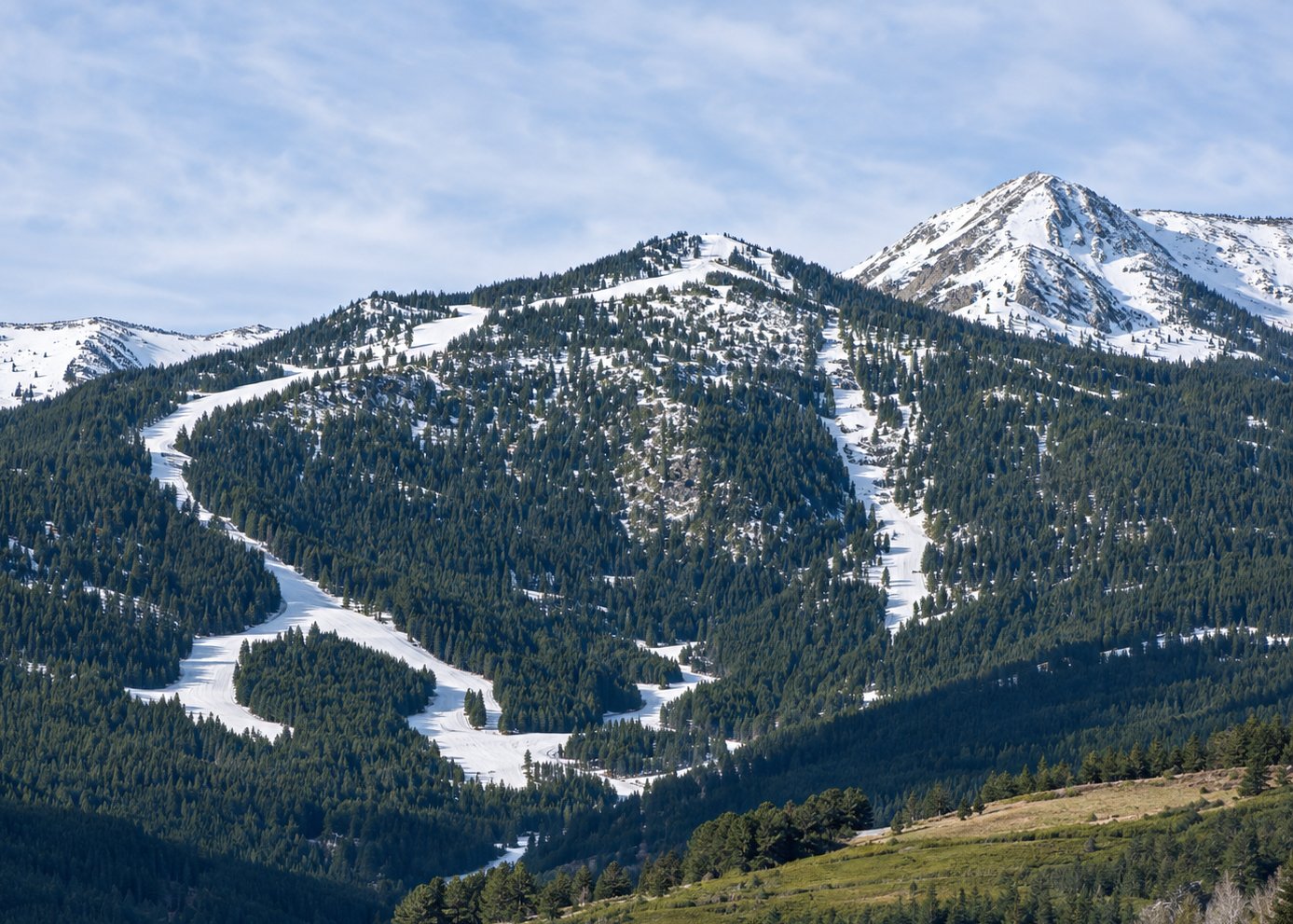
At first glance, it is tempting to see Puyvalador as another victim of climate change. The snow reliability in the Pyrenees has undoubtedly become more difficult. But the history of the resort suggests something more complicated. Puyvalador did not simply run out of snow. It became trapped by a business model that was increasingly difficult for a very small ski area to sustain.
The modern ski area was developed in the early 1980s, relatively late compared with many French mountain resorts. Its infrastructure was ambitious for such a small commune, with several lift sectors extending high above the village. The problem was that the economics were fragile almost from the start.
The original operating company was liquidated in the late 1990s. The commune then took over running the ski area but the municipal operation repeatedly ran into financial difficulty. Over the following two decades, Puyvalador went through a succession of operating structures, deficits and rescue attempts. By 2017 the domain had again become financially unsustainable.
A private operator later attempted to revive it. The idea was to create a low-cost, family-oriented skiing rather than compete directly with larger neighbours such as Les Angles. The relaunch showed some promise, particularly in good snow years, but it quickly ran into the legacy of the old infrastructure.
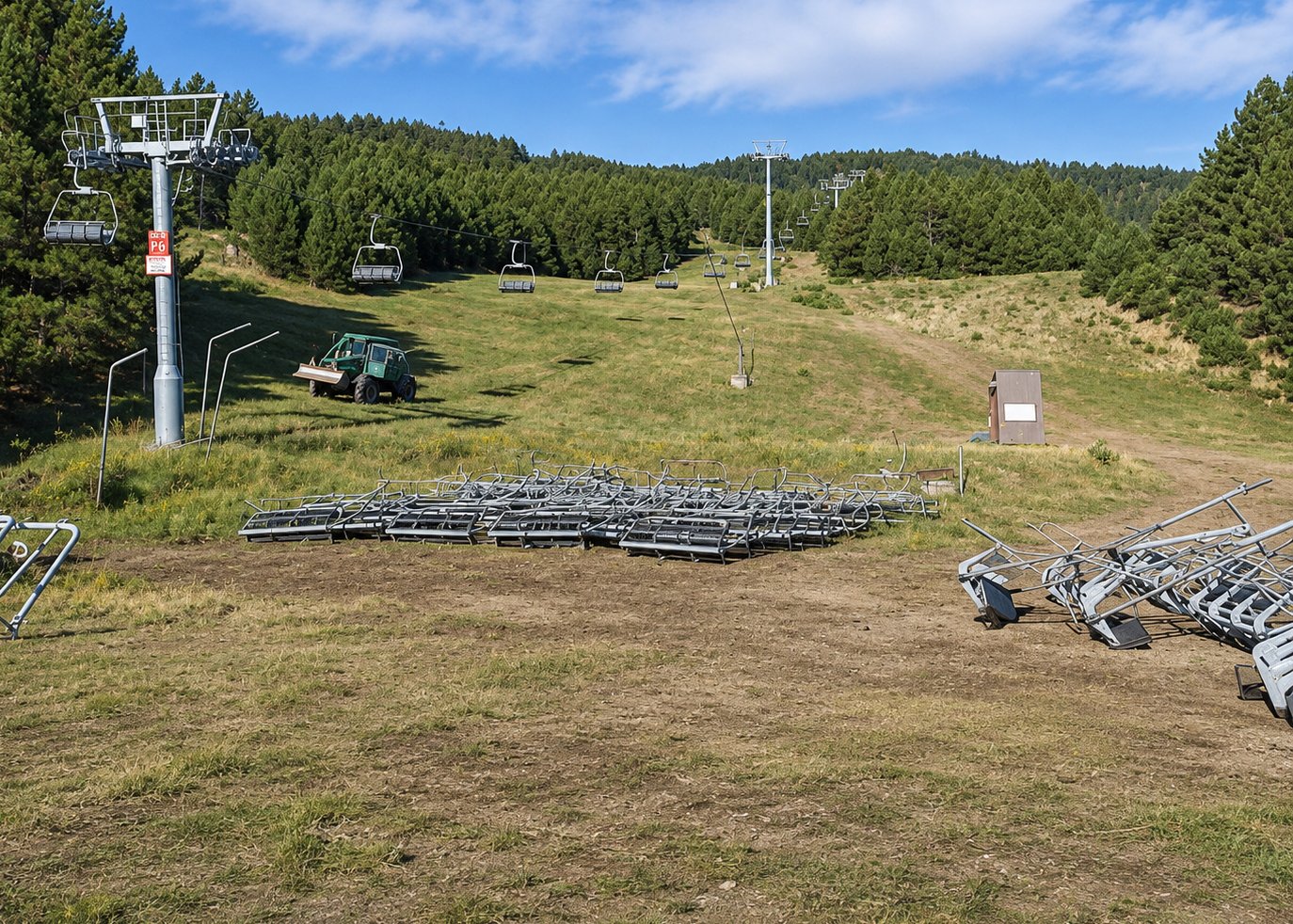
This is where Puyvalador’s real weakness becomes clear. For a large ski resort, a chairlift is an asset. For a very small ski area, it can also become a liability. It must still be maintained, inspected, insured and eventually overhauled regardless of how many people use it. Major inspections on older chairlifts can cost hundreds of thousands of euros. Those costs are manageable when a lift carries thousands of skiers every day, but potentially ruinous when the customer base is small.
Puyvalador’s layout made this problem worse. Rather than having one simple vertical spine, the ski area was divided between several sectors. Maintaining access to the full domain meant maintaining several pieces of infrastructure, each with its own operating and inspection costs.
This is why the nearby ski area of La Quillane makes such an interesting comparison.La Quillane, near La Llagonne, is much smaller than Puyvalador. It operates at roughly 1,700 to 1,800 metres, with only around 100 metres of vertical drop. Its terrain is overwhelmingly easy and aimed at beginners and families. On paper, it is a far less impressive ski area.
Yet it is still operating. The reason is largely structural. La Quillane has just two drag lifts, a compact set of pistes and a relatively concentrated snowmaking system. Its operating costs are therefore much easier to control. It does not need to maintain a long chairlift climbing hundreds of vertical metres, nor does it need to keep several separated sectors open. It has also accepted what it is.
La Quillane does not try to compete with Les Angles or Formiguères as a full-scale mountain resort. It sells a simple product: an accessible place to learn to ski, bring children and spend a few hours on the snow at a relatively low price. That modesty may be the key to its survival.
The contrast with Puyvalador is striking. Puyvalador had the better mountain, the greater vertical and the more interesting skiing. La Quillane has the more resilient business model.
Snowmaking also illustrates the difference. The Capcir can be extremely cold in winter, but natural snowfall is variable. A compact area such as La Quillane can take advantage of cold nights by producing enough artificial snow to cover a small number of short pistes. Doing the same across 600 or 700 metres of vertical, with several different sectors, is vastly more expensive.
Formiguères provides another useful comparison. It sits at almost exactly the same altitude as Puyvalador and faces the same broad climate constraints, yet it survived by modernising its lift system, investing in snowmaking and integrating itself into a larger regional structure. Its more recent development has also focused on making the uplift useful to pedestrians, ski tourers and summer visitors, rather than relying exclusively on downhill skiing.
Again, the lesson is not that altitude no longer matters. It does. Climate change is making the economics of lower and mid-altitude skiing more difficult throughout the Alps and Pyrenees. But Puyvalador’s history suggests that climate was only one part of the problem. The resort had been financially fragile long before the most recent sequence of poor winters. It suffered from ageing infrastructure, repeated operating deficits, insufficient investment and a difficult relationship between the commune and the later private operator. Its decline was therefore less a story of a mountain becoming unskiable than of infrastructure becoming disproportionate to the number of people using it.
The cross-country skiing around the Capcir offers a further contrast. Nordic skiing has survived much better because it does not carry the same fixed infrastructure burden. Trails still need grooming, signage and maintenance, but there are no chairlifts requiring six-figure inspections. The same terrain can also be used for snowshoeing, ski touring and other winter activities. In that sense, the surviving winter economy of the Capcir increasingly reflects a broader pattern. Small ski areas can still work, but only when their infrastructure is proportionate to their market.
Puyvalador tried to operate a relatively substantial alpine domain with the financial base of a tiny municipality. La Quillane survives because it never tried to become a miniature version of a major resort. The irony is that Puyvalador had the better skiing. La Quillane had the better business model.