
A hero for some, a bête noire for others. Gilles Chabert former boss of the École du Ski Français and member of the 2030 olympic committee has died aged 74.
Chabert was one of the most influential figures in French skiing. For 24 years, from 1994 to 2018, he led the Syndicat national des moniteurs du ski français (SNMSF), the organisation behind the familiar red jackets of the École du Ski Français. He was a formidable advocate for ski instructors, the mountain economy and the interests of the resorts. His influence extended into regional politics, a director of the Dauphine Libere newspaper and the preparations for the 2030 Winter Olympics.
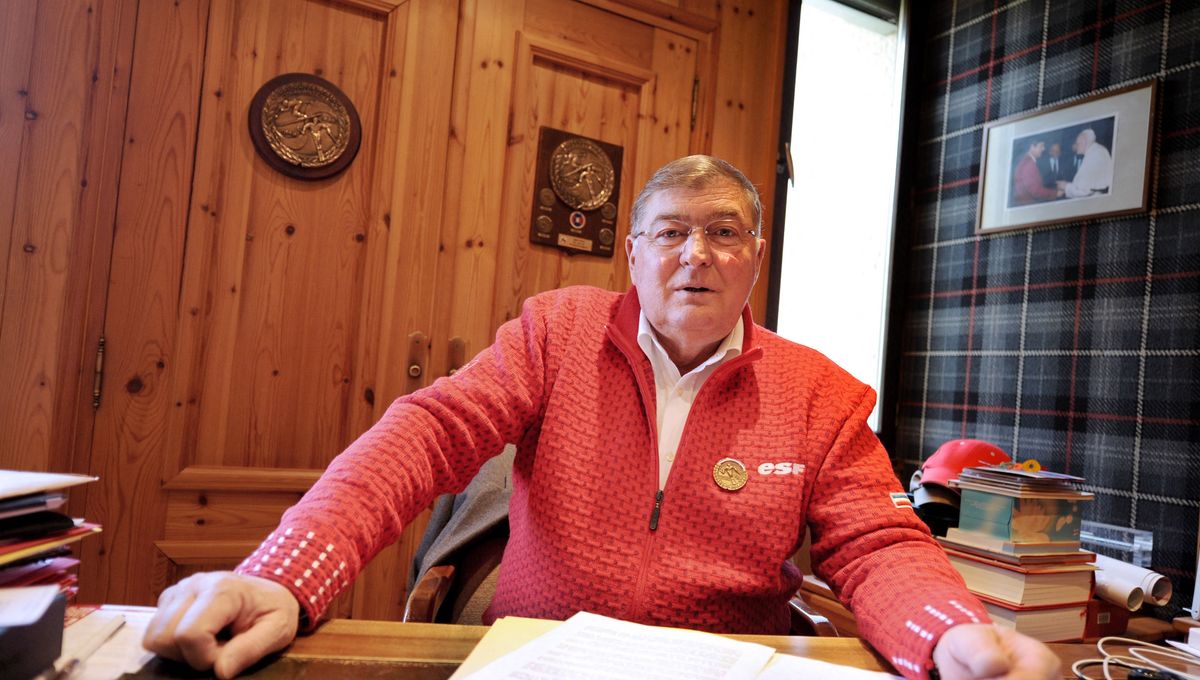
His admirers remember a passionate defender of a profession, a man who understood the mountains and knew how to make himself heard in the corridors of power. They speak of solidarity, technical excellence and safety. These are not insignificant achievements, and his death is a genuine loss to those who knew and respected him.
But there is another side to this legacy, one largely absent from the immediate chorus of tributes in today's press. Defending a profession and defending a monopoly are not necessarily the same thing. Under Chabert's long leadership, the ESF became an institution of extraordinary influence in French ski teaching. Its familiar red-clad instructors are part of the national skiing identity. Yet the strength of an institution raises a fundamental question: at what point does protecting its members become protecting them from competition?
In March 2026, the French Competition Authority fined the SNMSF €3.4 million over an exclusivity clause introduced in 2006. The clause prevented affiliated instructors from teaching through competing ski schools or independently, under threat of losing their place within the ESF network. The authority concluded that these practices restricted competition and the freedom of instructors to conduct their own businesses.
The ruling does not settle every argument about Chabert's personal responsibility, nor does it erase the legitimate case for high standards in ski instruction. It does, however, provide a concrete example of the system's restrictive effects during the period in which he led the organisation.
Another, less visible battle concerned the status of ski schools as approved training centres. The rules governing where trainee instructors could complete their compulsory placements gave approved schools a significant advantage in recruiting the next generation of monitors. For small independent schools, which might have had customers and work to offer but lacked the numbers or administrative capacity to qualify as training centres, this created a particularly difficult obstacle: they could struggle to recruit trainees while the established ESF network enjoyed a structural advantage. The stated purpose of such requirements was to ensure proper supervision and the quality of professional training. But the effect was to make it harder for smaller competitors to grow. In a profession already dominated by a powerful national organisation, training-centre status was not simply a technical question; it could determine which schools had access to future instructors. Chabert's role in defending the interests of the SNMSF makes this another important part of the debate over his legacy.
The controversy extends beyond competition between ski schools. Access to the French profession has also been shaped by demanding qualification and recognition procedures for instructors trained abroad. Such requirements can be defended on grounds of safety and professional competence. But when professional standards become barriers to entry, it is legitimate to ask whether public safety is the only interest being served. The distinction between protecting skiers and protecting incumbents deserves serious examination.
Age has been another contested issue. The so-called pacte Chabert, adopted in 2012, sought to organise a gradual reduction in the work allocated to older instructors while making room for younger recruits. Supporters presented it as intergenerational solidarity; critics questioned the restrictions imposed on experienced professionals. The policy illustrates the difficulty of balancing the survival of a profession with the rights of the individuals within it.
Chabert was, above all, a powerful lobbyist. That is not inherently a criticism: professions have the right to defend their interests, and mountain communities often feel overlooked by national decision-makers. But the more powerful a lobby becomes, the more important it is to examine whose interests it represents, whose voices it excludes and who bears the cost of its victories.
This is especially relevant as the French Alps prepare for the 2030 Winter Olympics. The Games promise international attention and economic opportunity, but they also invite questions about governance, public resources and the distribution of benefits. Chabert's involvement in regional mountain policy and the Olympic preparations makes his legacy part of a larger debate about who speaks for the mountains, and with what accountability.
None of this requires denying his commitment, his skill as a negotiator or the loyalty he inspired. Nor does it justify reducing a complex life to a single epithet. But neither should his death turn a powerful professional leader into an uncritical national hero.
Shakespeare's words remain an uncomfortable reminder: “The evil that men do lives after them; the good is oft interred with their bones.” The point is that the institutions and restrictions associated with a powerful person's tenure can outlast the tributes paid at his funeral.