Wed, 18 March 2026
Vertical Climbed: 535 meters (1,755 feet)
Vertical Descended: 539 meters
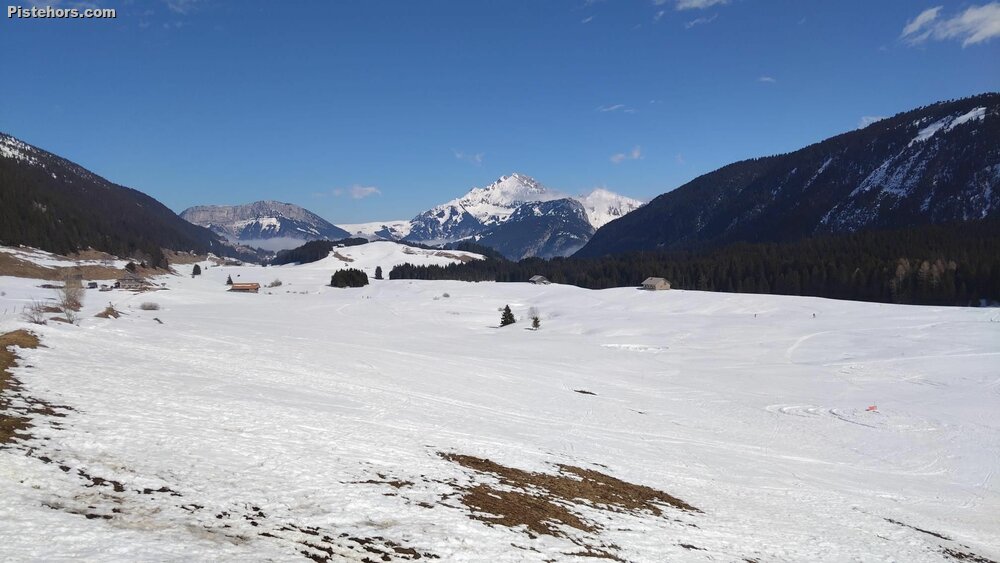
The Plateau des Glières is one of the most distinctive Nordic landscapes in the French Alps: a high pastoral basin of open meadows, forest margins and enclosing limestone slopes, where cross-country skiing has a calm, spacious, almost contemplative character. The Nordic domain is officially given as 29 km of trails, between about 1350 and 1550 metres, with a reputation for early snow and a setting that feels both natural and self-contained. The claimed piste length, without doubling up, seems reasonable based on our visit.
What gives skiing on the plateau its particular appeal is the balance between openness and shelter. Some trails run across broad alpages where the light is wide and the horizon open; others slip into the woods, where the atmosphere becomes quieter and more intimate. The skiing is varied rather than extreme: this is not a place defined by one great climb or one dramatic descent, but by a succession of gentle changes in rhythm, with terrain that remains interesting without becoming intimidating. Official descriptions consistently emphasize that mix of pastureland and forest and the range of pistes for different abilities.
In practical terms, Glières is a domain that lends itself particularly well to touring. Because the plateau forms a coherent whole, skiing here has a pleasing sense of continuity: you move through one landscape rather than between separate sectors, and the day tends to unfold in loops and traverses rather than in starkly contrasting blocks of terrain. That gives the area a very readable, very settled feel, and helps explain why it is so often described as both sporting and contemplative.
The history of the plateau gives it an additional depth that few Nordic areas can match. Glières is a major historical site in the Haute-Savoie because it was one of the key places of the French Resistance during the Second World War. From 31 January to 26 March 1944, 465 maquisards gathered on the plateau under the successive command of Lieutenant Tom Morel and then Captain Maurice Anjot to receive Allied parachute drops of weapons intended for the maquis of Haute-Savoie. On 26 March 1944, they faced a major attack by Vichy forces and the Wehrmacht. 129 maquisards and 20 local inhabitants lost their lives in the action.
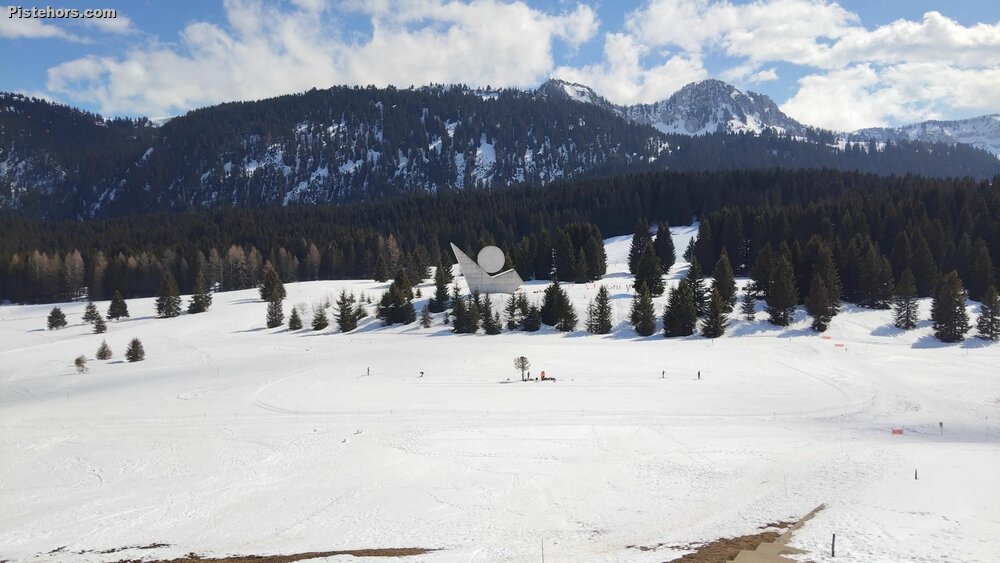
That past is still very present in the landscape. The Plateau des Glières is not only a ski area but also a place of remembrance, with memorial sites and an interpretation space dedicated to the history of the maquis. That means a day’s skiing here carries a slightly different tone from an ordinary Nordic outing: alongside the beauty of the plateau there is a strong sense that this is a place marked by memory as well as by snow and weather. It is more than just a cross country skiing destination.
https://domainenordiquedesglieres.com
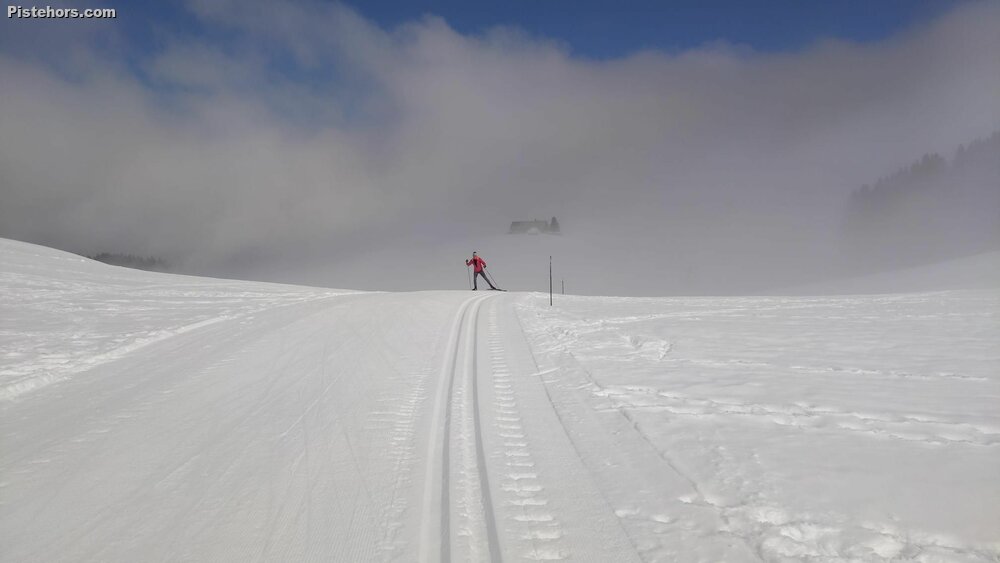
I arrived on the Plateau des Glières in low cloud and almost zero visibility, with the whole upper plateau wrapped in fog. The day began with a small but slightly unnerving mix-up over skis: I had accidentally picked up a top-of-the-range pair that a racer had left on top of mine. Fortunately they did not fit my boots, so the mistake was quickly spotted and everything was sorted out before I set off.
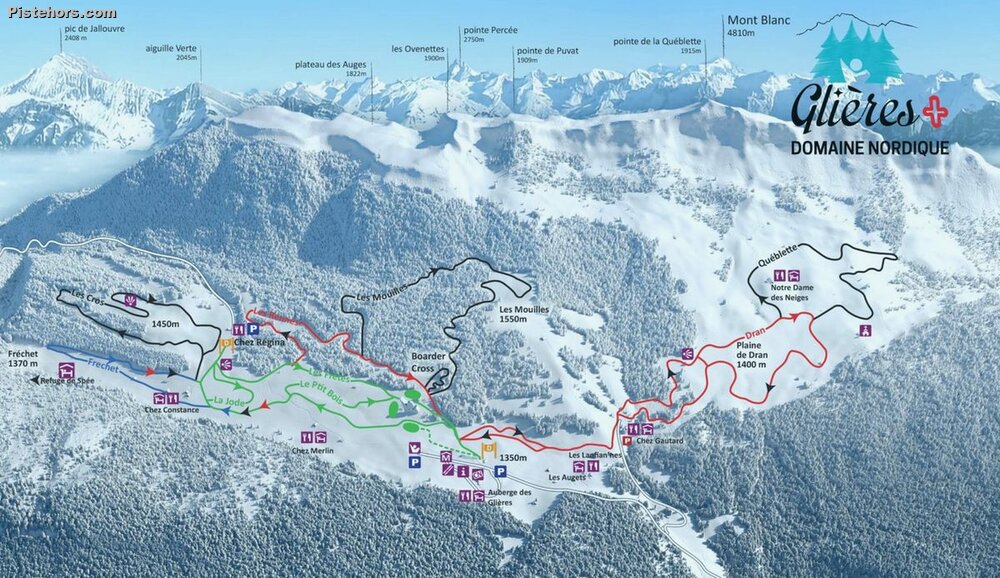
I headed out anyway, disappearing almost at once into the fog on the Jode. Visibility was so poor that I could barely make out the piste markings, and after a short while it was clear that route-finding up on the plateau was going to be difficult. I decided conditions might be better lower down, and dropped away on a twisting, slightly awkward descent through the mist. It was only once I reached the Plaine de Dran that things improved, with enough visibility at last to ski more freely.
Down there I settled into a couple of loops, including the Québlette black, which proved enjoyable rather than intimidating. Despite its label, there was nothing especially difficult about it in the day’s conditions. After that I made my way back towards the Foyer on a fairly sustained climb, and by the time I got there the light had begun to change. The cloud still clung to the plateau, but the sun was now somewhere overhead, diffusing a pale brightness through the mist and giving the place a much gentler feel.
I went back out for a loop of the Fréchet blue, where the snow was still holding up well. From there I skirted round the Rennes red, but hesitated at the Mouilles black, which climbs steeply through the woods to around 1550 metres and the top of the domain. On this occasion I decided against it. There is always something satisfying in leaving a little unexplored, and it felt like the sort of trail worth saving for another visit. The Cros black was closed, which removed any further temptation in that direction.
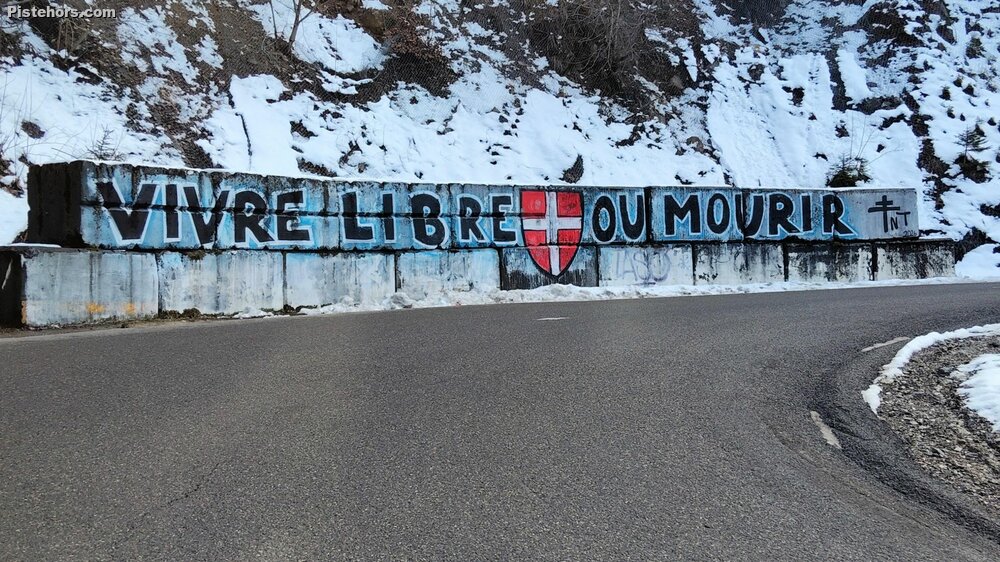
One small surprise of the day was realising that the plateau can also be reached from Le Petit-Bornand by a very narrow mountain road, the same one I had cycled a few years ago without really connecting it to ski area at the time. It was one of those odd little moments of geographical recognition that make a place feel more familiar.
By the time I headed out for a second loop of the Jode, the snow had changed completely. What had been firm enough earlier had now turned very soft, and that was really the signal to stop. So I called it a day: a ski that had begun in dense fog and uncertainty, improved steadily as the light lifted, and ended in soft spring snow under bright sun.
Foggy until 1pm, this kept the snow from getting too soft until around midday. Roads clear. Lots of snow. Only the Clots trail was closed.