
At 48, Edward Limbaga demolishes houses in California, plays golf with NHL legend Teemu Selänne, and until recently had never set foot on a pair of skis. Yet the American-Filipino newcomer has set his sights on the ultimate sporting stage: the 2026 Winter Olympics in Antholz.
“My journey is a little different,” he confesses with a smile, peeling off his skis in the icy Ruka stadium. He stands alone, no teammates, no fans, just a few curious journalists. It fits the story: on Sunday he completed only four of the 20 kilometers before pulling out, already seven minutes behind. In the 10 km classic two days earlier, he finished last of 108 skiers, by a large margin.
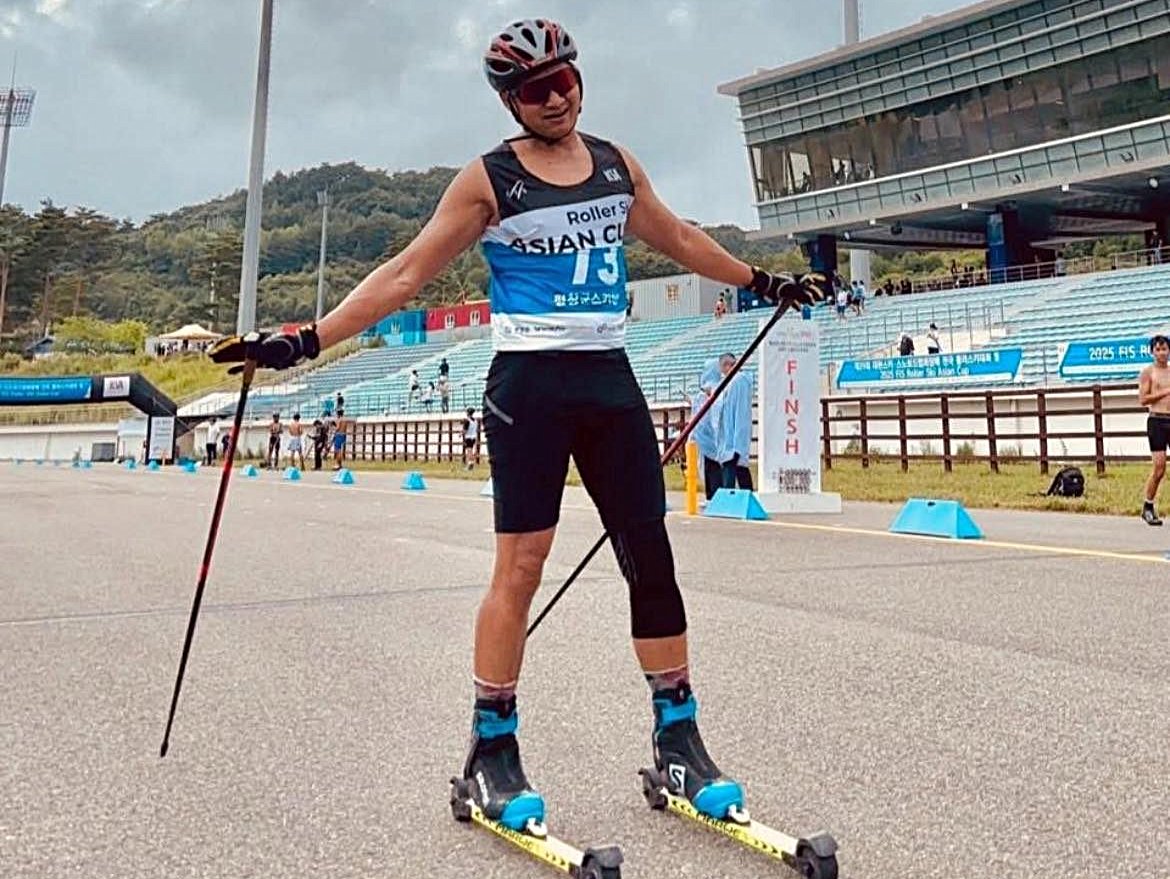
Still, Limbaga radiates joy. “Oh my God, I’m just happy to be in the same starting field. Their level is incredible. I get to see everything behind the scenes. I’m very lucky.” Limbaga’s path to elite skiing is as unconventional as they come. In July, the lifelong roller hockey player began roller-skiing with the goal of representing the Philippines, the birthplace of his parents, at the Olympics. Initially, he had hoped to join the country’s ice hockey team, but residency requirements made that impossible.
“So they told me: with your roller hockey background, why not try roller skiing? That leads to snow skiing, and those points count for Olympic qualification,” he explains. “So here I am. I started in July, and now I’m competing against the best in November.”
To fund his adventure, friends, family and supporters buy items from his personal clothing line, Eddie Will Go, and a few sponsors have stepped in. “Not enough, but enough to make this dream possible,” he says.
But while Limbaga’s optimism is infectious, not everyone on the World Cup circuit shares the enthusiasm. His presence and that of other athletes from “exotic” nations who have barely touched skis was made possible by a new FIS rule. Before Christmas, athletes with very low points may enter World Cup races to help their countries secure a basic Olympic quota. The rule, pushed by the IOC to increase global representation, opened the door to complete beginners.
The consequences were visible to millions. During the 10 km classic in Trondheim, TV viewers winced as Limbaga fell on a steep descent, just as the world’s best skiers approached at 70 km/h. A collision was avoided “by miracle,” as one commentator put it. Austrian skier Mika Vermeulen did not mince words: “It’s dangerous. You start with kids’ courses, not the World Cup. It’s absurd. There should be clear criteria. If you have 80 FIS points or more, you have no business here. Period.” Norwegian Jan Thomas Jenssen added: “These guys don’t know how to ski. He can’t even take a normal turn. And we are the ones risking crashes because they start ahead of us.” Sprint specialist Harald Østberg Amundsen proposed a simple fix: “Make the slowest athletes start last. Then they never meet the best, and I don’t have to throw myself into the snow to avoid killing someone.”
For his part, Limbaga remained calm and respectful after the Trondheim incident: “It was a bad place to fall, one of the hardest turns. I try to follow the rules and stay out of the way. Usually there’s space and I’m alone. I hope others stay respectful and pass wide.” He knows he is far from elite level. He knows he is learning on live television. But he insists he is doing his best. training, observing the pros, copying their technique, and spreading enthusiasm for roller skiing in warm-weather countries.
A wider debate: should complete beginners be allowed in the World Cup? The controversy highlights a deeper tension in international sport:
This isn't the first time skiers from minor nations have attempted to get into the Olympics. Adrian Solano from Venezuela took part in the FIS Nordic World Ski Championships 2017 at Lahti. Solano had never seen snow before although had done some roller skiing at home. He was seen out of control and falling multiple times. He was dubbed "the worlds worst skier". His aim was the 2022 Olympics but was last heard of in a career in adult films. Violinist Vanessa Mae did make it to the 2014 Sotchi games to compete in downhill skiing for Thailand where she finished last. She picked up a four year ban after irregularities were found with the qualifying races. Noureddine Bentoumi competed for Algeria in the 2006 Turin winter games. Bentoumi was born in Chamonix and had a background in long distance running before turning to cross country skiing. Despite this more promising background he finished second from last in the 2005 15km World Championship race, just ahead of British national team member Alan Eason and was eliminated from the Olympic 50km race at the 27km mark due to his speed. His story became the basis of the film "Good Luck, Algeria"
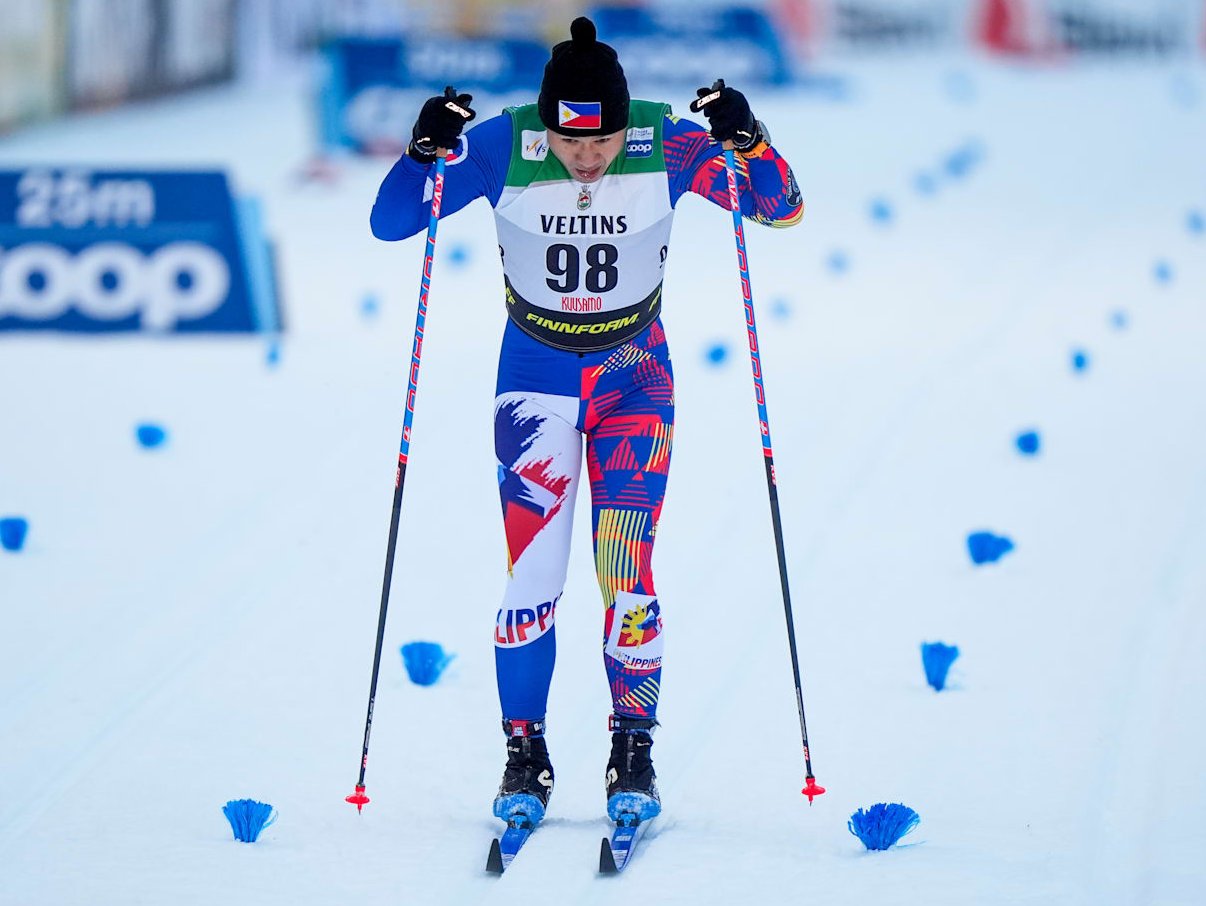
FIS race director Michal Lamplot tried to reassure critics: “These opening races are an exception. It’s not dangerous as long as everyone stays vigilant.” But many athletes and viewers remain unconvinced. Allowing novices who have skied for weeks, not years, into the world’s most demanding competitions has real consequences, not only for race integrity but for physical safety.
As one commentator harshly summarized: “Olympics or not, athletes who cannot ski have no place in international competitions.” Edward Limbaga is not a villain. He is a passionate athlete chasing a once-in-a-lifetime dream, supported by a federation eager to grow winter sports in the tropics. His enthusiasm is sincere. His story is compelling. And his humility is genuine but his presence on the World Cup circuit, enabled by a controversial rule, has forced the skiing world to confront an uncomfortable question: Where should the line be drawn between opportunity and safety? Limbaga will continue skiing, learning, and dreaming of the Olympics. Whether the FIS rule that brought him there survives the season is another story entirely.